Mr. Tredinnick's Class Site
  • Home
  • Geography Courses
    • AP Human Geography
    • Biogeography
    • Cartography
    • Geographic Information Systems (GIS)
    • Global Studies
    • Human Geography (Tredinnick)
    • International Relations: World Environmentalism Focus
    • World Geography
  • Geography4Geographers
    • G4G | Resources >
      • Human Geography Resources
    • G4G | Presentations >
      • Landscape of Remembrance
      • Teaching Geopolitics
  • Archived Courses
    • AP Comparative Government
    • AP European History
    • AP U.S. Government
    • AP World History
    • Art History
    • Behavioral Science
    • Economics
    • Environmental Policy
    • International Relations
    • Minnesota History
    • Psychology
    • Sociology
    • United States History
    • U.S. Government
    • World History (Fall Semester)
    • World History (Spring Semester) >
      • World History Summer Session
  • About

Welcome to Biogeography!

Picture
Biogeography deals with the spatial distribution of the planet's plants and animals over time, as well as the physical forces that impact them. Among others, biogeography draws from climatology, and ecology, to better understand the distributions and diverseness of the planet's organisms. The study of biogeography seeks to better understand distributions of species, and connections to the physical landscapes, as well as how humans influence these processes. Students will utilize local, and remote resources to better understand process such as speciation, adaptation, and the effects of change. Students will incorporate topics from biology, botany, and zoology under a geographic framework to better understand the connections that plants and animals have with the environment they live in. Using project-based methods of observation, data collection, and geospatial modeling, students will incorporate in scientific studies to better understand spatial distributions of the planets plants and animals.
Course Objectives
  • Understand the past and present forces that affect the process of speciation and dispersal of the planet's flora and fauna.
  • Incorporate scientific theories from the social and physical sciences to better understand the causes of plant and animal distributions.
  • Apply geographical inquiry and analysis skills to better understand biogeographical concepts from a spatial perspective.
  • Understand the issues affected future life on planet as a means for applying conservation and mitigation mindsets. 

Unit I | Physical Geography

To build up the foundations of the study of biogeography students need a foundation of study in physical geography. Students will be introduced to concepts from related fields such as climatology and earth science, that will be relevant in the following units. Time will also be taken to establish course procedures and expectations for the coming year to allow for the maximization of instructional time.

Unit I Schedule

Module 1.1 | Introduction to Biogeography
Introduction
​
Welcome to Biogeography. To answer your most basic question - the field of biogeography tries to explain why stuff lives where. Today's lesson will introduce some of the most basic principles of the class and give a preview of the types of things we'll be doing this year. 
​
Today's Objective
  • Students will be introduced to the general layout of the course and the expectations for the coming semester. Students will examine base concepts of biogeography and be able to apply its basic principles. 
    • Central Question: What is biogeography?
Today's Checklist
  • Complete Forum 1.1 | Factors Determining Life
    • What are five things necessary for lift to exist? List your answers in the form of complete sentences
  • Watch & Discuss: Where Life Lives
    • Follow along with the video Biogeography: Where Life Lives by NOVA and be ready to discuss answers to the two questions below;
      • What important questions is the study of biogeography trying to answer? 
      • ​How does biogeography compare to other sciences like biology or earth science?
  • Read & Discuss: Making a Career out of It 
    • Read over the Powerful Geography description for an Environmental Field. of your choice and be ready to explain how geography contributes to that field.
    • ​Review the Powerful Geography description for Biogeography. to learn more about how it is important in many fields. 
  • Complete Field Lab | Meeting the Ratites
    • We will head to the African Grasslands to observe the Common Ostrich (Struthio camelus). While you are there we will be answering the following questions;
      • DESCRIBE the features the ostrich have that enable it to live in its given range?
      • EVALUATE what about the ostrich prevents it from being able to extend its range into different biomes or different geographic regions.
  • Complete Map Lab | Ratites Geoinquiry
    • Use the maps and the information provided from the contextual information below to complete the series of questions regarding the distribution of ratites around the world. To complete the geoinquiry use the Ratite Distribution webmap (Ratites Distribution Map).
    • Context: The family of Ratites includes the species of Emu, Ostrich, Cassaway, Rhea, Kiwi, Elephant Bird (extinct), and Moa (extinct). Though varying in size the species within the ratite family share the characteristic of lacking an extended keel to their sternum. The keep typically acts as an anchor for the required wing muscles for flight, as these birds lack the keel they are flightless.
    • ​Thought Questions
      • ​​DESCRIBE four potential explanations for the distribution of ratites
      • EVALUATE which of you explanations above which seems the most plausible? Explain your reasoning. Cite specific evidence from the map, or a related text to support your explanation
  • Complete CFU 1.1 | Introduction to Biogeography
Looking Ahead
​
Next class will continue on with the base foundational knowledge of Biogeography and buildings a better understanding of what the field is. We will do this by looking at its origins and trying to understand more so how the physical and biological sciences are better understood within a geographic framework.
Module 1.2 | History and Philosophy of Biogeography
Introduction
A lot of early science was trying to understand and explain how the world got to be like it is now. Principles such as evolution, adaptation, distribution, things that are commonly rooted in biology, actually belong firmly within the field of biogeography. Many early naturalists, like Charles Darwin and Alfred Russell Wallace, were some of the ones that originate the ideas and concepts of biogeography. Today's lesson will further investigate some of these ideas and connect them to the study of biogeography.
Today's Objective
  • Students will be able to explain the scientific basis and philosophical understanding that form the foundations of biogeography and how scientific studies can be incorporated in.
    • Central Question: What are the major theories associated with Biogeography? What Scientists came up with those theories? How are they connected to the geographic study of plants and animals? Why might past scientific studies be important to the geographical distribution of plants and animals?  
Today's Checklist
  • Complete Forum 1.2 | Science and Geography
    • What types of quantitative and qualitative data might be helpful when conducting biogeographical studies? List 2 quantitative and 2 qualitative characteristics​Quantitative  - Related to a quantity, can be numerically represented    Qualitative - Related to a quality, looking at non-numerical characteristics
  • Review the History of Biogeography notes
  • Complete CFU 1.2 | History of Biogeography
Looking Ahead
​
Next class we will be getting you logged into ArcGIS for the first time and getting you to make your first map! We will be looking at the large geographical features that define the Earth and allow us to better talk about locations.
Module 1.3 | Biogeographic Realms
Introduction
​
It should come as no surprise that a lot of our conversations in this class will be connected to discussions of place. Today we're going to start building up your alphabet of geographic locations and really look at the connections between plants and animals based on their geographic locations (the so called biogeographic realms). 
Today's Objective
  • Students will examine the biogeographic realms and explore their placement and characteristics. Students will examine the spatial distribution of Biomes and their groupings into regions. 
    • Central Question: What is the connection between plants and animals with the climate and landscape? 
Today's Checklist
  • Complete Forum 1.3 | No two lands are the same
    • Guiding Thought Question: Even though two areas may be classified as the same biome why might they have such wildly different plants and animals? What factors will lead to different speciation? 
  • Complete Map Lab | Making Your First Map
    • One of the main resources that a biogeographer uses to communicate information about whatever they're studying is maps. You will be making a very basic map with multiple layers today to help you learn the basic physical regions of the world.
Directions
  • Log in to ArcGIS by navigating to https://www.arcgis.com/index.html.
  • Sign in using the credentials provided by the instructor.
  • On the main screen, navigate to the main map view by clicking on the Map option along the top bar. 
  • Take a second to familiarize yourself with the format of the webmap
  • Change the Basemap to the Imagery Background
  • Ocean Labels
    • Add labels to your map by selecting the Layers menu along the top bar
      • Open the Create Sketch Layer menu (title this layer "Labels")
      • Select the Text option in the map notes menu
      • Add labels for the 5 Oceans (Arctic, Atlantic, Pacific, Indian, and Southern) by clicking on an area and then typing the name of the Ocean. 
      • Once finished click off of what you were typing, then you can click back onto it to edit the symbology. Add a 1px halo in white around the lettering.
  • Continents
    • Open the Layers menu along the left side bar
      • Select the Add Option 
      • In the drop down menu change the search from My Content, into ArcGIS Online Instead.
      • In the search bar type "Continents" and search.
      • The first option should be correct, the World Continents layer created by Map Maker Add it to you map by selecting the + symbol.
      • Navigate to the Properties menu on the right bar.
        • Hover you mouse over the World Continents layer in the Styles tab
        • Change the attribute to add the Field as "Continent"
        • Ensure that each continent is displayed as a different color
        • Use the Sketch and Text option to add a label for each of the Continents.
  • Save the Map
    • ​Select the Save menu along the left bar (select "save" not "save as" you only ever use save as if you're wanting to create a new version of a map to create a different map)
    • Name the map "Basic Geographic Locations firstname_lastinitial"
    • Finish by selecting Save Map
  • Share the Map
    • Select the share option on the Left bar.
    • Choose to share to organization and then close the share menu.
    • Copy the URL form the top bar and post it into the CFU 
    • Your Finished map should look like this Example.
  • Complete Map Lab | Biogeographic Realms
    • Open up the Biogeographic RealmsLinks to an external site. webmap and answer the following series of questions using the map. Make sure you read the information in the splash page to help better understand the concept of biogeographic realms. Write the answers to the following questions in you notebook or notes app.
      • EXPLAIN - what the purpose of studying biogeographic realms is in your own words
      • IDENTIFY - What is the largest terrestrial biogeographic realm? (Terrestrial - Related to land surface, not ocean surface)
      • IDENTIFY - Which biogeographic realm is most of North America part of?
      • IDENTIFY - Turn on the Terrestrial Ecoregions layer by opening the layer menu in the top left and then checking the box in the pop-up menu. Which biome makes up the largest part of the Afrotropics Biogeographic Realm?
      • EVALUATE - Which two biogeographic realms appear to be the most similar in their make-up (in terms of which biomes are part of the realm).
  • Complete CFU 1.3 | Biogeographic Realms
Looking Ahead
​
Next class we will be investigating further into how the Earth got its shape and how that has affected the distribution of plants and animals as well. Jumping into the realm of the physical sciences, specifically geology, we'll look at the theory of continental drift and how an understanding of biogeography actually helped understand the evidence associated with the theory. 
Module 1.4 | Continental Drift
Introduction
​
By looking at how the Earth got its shape, we can better understand the forces that have influenced the distribution of plants and animals at present. Today's look will start at a large scale, looking at the continents and how they were formed.
​
Today's Objective
  • Students will examine the connections between the movement of the continents and the impact that has on the distribution of plants and animals. Students will be able to explain the mechanisms by which that happens, and the observations that led scientists to develop the theory. 
    • Central Question: How did the continents get their shape, and how does that impact the distribution of plants and animals? ​
Today's Checklist
  • Complete Forum 1.4 | First Law of Geography
    • Guiding Thought Question: Explain how Tobler's Law of geography will relate to the distribution of plants and animals around the planet's surface.
    • TOBLER'S Law: Everything is related to everything else, but near things are more related than far things.
  • Complete Map Lab | The Big Puzzle
    • Use the physical map of the world and answer the following series of questions in your notebook or notes app.​​
      • IDENTIFY - Which continents seem to fit together easily? As in, which continents seem to naturally fit in with one another?
      • EXPLAIN - Which continental plates or landmasses were the most difficult to determine how they linked together?
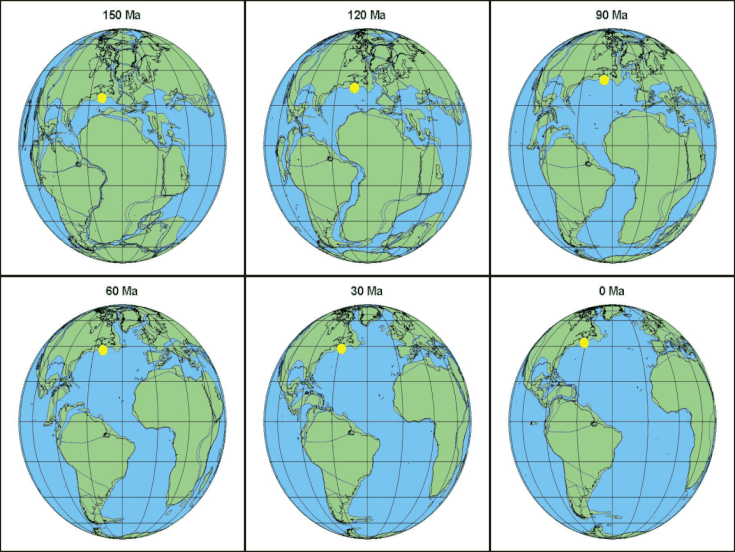
      • EVALUATE - Based on the Continental Drift theory which areas would you expect to be most similar to one another? (In terms of flora and fauna) Choose one continent and explain your answer using evidence from the map quest or the illustration below.
  • Watch & Discuss about Alfred Wegener's theories
    • Watch the video talking about Alfred Wegener and the development of the Continental Drift theory. As you are watching think about answers to the following questions;
      • ​How does this theory help demonstrate the continual development of scientific theories.
      • How does this theory connect to the developing understanding of the distribution of plants and animals?
  • Listen & Follow Along about the ideas and theories of continental drift
  • Complete CFU 1.4 | Continental Drift
Picture
Picture
Looking Ahead
​
Next class will continue the work into how the Earth got its shape, but at a smaller scale. We will be heading out onto Zoo grounds to be finding examples of the processes of geomorphology.
Module 1.5 | Geomorphology
Introduction
At a much smaller scale than the continental level (as connected to continental drift) there are many physical forces that are constantly shaping the planet we live on. Today's we'll be looking at these forces and trying to identify specific examples of each form.  
​
Today's Objective
  • Students will be able to explain the principles of erosion and how the earth is continually shaped. Students will take notes on the types of erosion and then conduct a map and field study to find evidence of different types of geomorphology
    • Central Question: Why is the earth's surface shaped like it is? What processes have caused it to be that way?
Today's Checklist
  • Complete Forum 1.5 | Earth as a Geoid
    • Guiding Thought Question: Why is it inaccurate to say that the Earth is a perfect sphere?
  • Review notes on Geomorphology
  • Complete Shape of the Earth Field Lab
    • Go out into the Zoo and find an example of one of the forms of geomorphology from the notes. Post your example in the Shape of the Earth. FlipGrid with a short description of how the specific form of geomorphology is represented. 
  • Complete Finding Evidence Map Lab
    • Use Google Earth (https://www.google.com/earth/Links to an external site.) to answer the following series of questions to find specific examples of geomorphology around the world. Then complete the thought questions related to the processes of change. Complete the questions in your notebook or notes app and be prepared to discuss. 
      Identifying Geomorphology
      Use the search icon (located second from the top in the sidebar) to search for for the different locations listed below and correctly identify the types of geomorphology that is taking place.
      • Identify which geomorphological process is most likely responsible for the shaping of the landscape around Tromsø, Norway (Use English spelling "Tromso")
      • Identify which geomorphological process is most likely responsible for the shaping of the landscape to the east of Moremela, South Africa
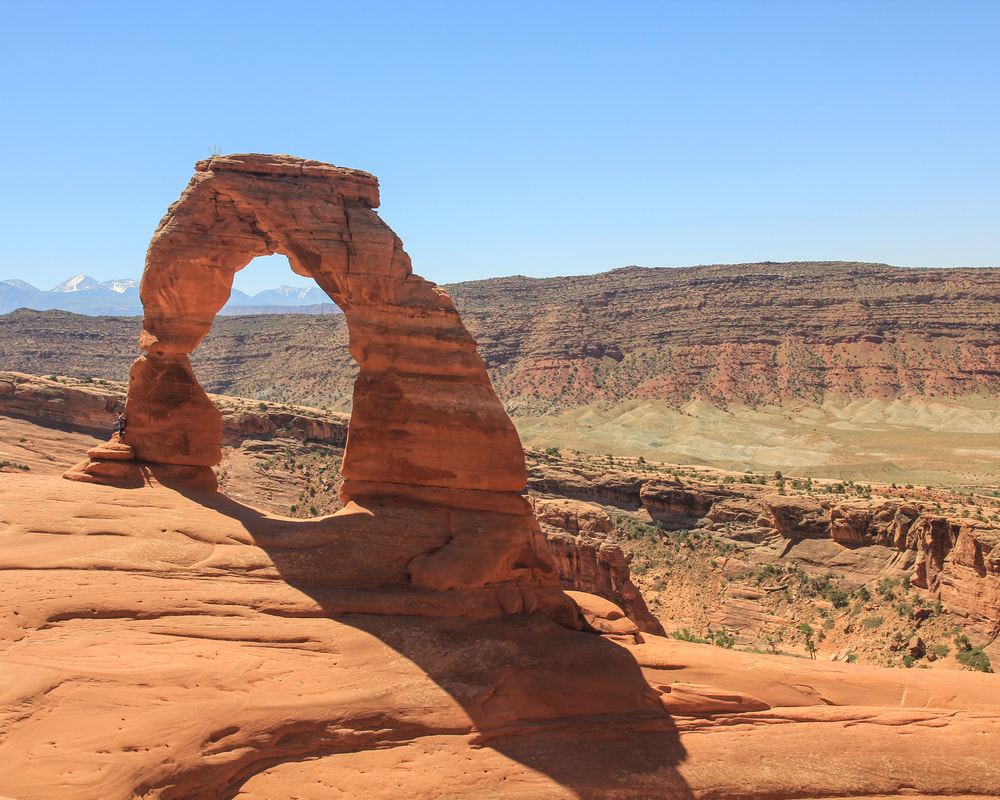
      • Identify which geomorphological process is most likely responsible for the shaping of the landscape at Delicate Arch, Utah
      • Identify which geomorphological process is most likely responsible for the shaping of the landscape at Kloof Corner Ridge, Table Mountain (Nature Reserve), Cape Town, South Africa
      • Identify which geomorphological process is most likely responsible for the shaping of the landscape of Tahiti and the surrounding islands of French Polynesia
    • Thought Questions: Thinking about Geomorphology
      • Which of the geomorphological processes can be the most helpful or harmful to humans within the span of one lifetime (about 70 years)? Explain your reasoning and give a real-world example to support your reasoning.
      • Explain how the process can be helpful or harmful to humans within one lifespan (about 70 years). Remember you are trying to explain how it is the MOST helpful or MOST harmful to humans.
      • Give an example of a real-world application (might require internet research) and explain how it has been helpful or harmful to humans.
  • Complete CFU 1.5 | Geomorphology
Looking Ahead
​
Next class will be a heavy notes day as we're looking at the processes of solar insolation and how they impact the climate and weather of the planet. This is foundational information to understand the concepts of climate and how they connect to the distribution of plants and animals around the world.
Module 1.6 | Solar Insolation
Introduction
​
All life on the planet is connected back to direct or indirect contributions of energy from the Sun. The distribution of that energy on the Earth's surface gives us our seasons, weather, and helps dictate what sorts of adaptations species will need in order to live in a specific area.
​
Today's Objective
  • Students will examine the effect the sun's energy has on seasonal variations, and the effect that a place's location will have on the amount of solar insolation it receives throughout the course of the year by completing a map lab and reviewing concepts through direct instruction.  
    • Central Question: How does a place's location on the planet affect the climate conditions it will experience throughout the year? (3.1.b)
Picture
Today's Checklist
  • Complete Forum 1.6 | The Sun's Powers
    • Guiding Thought Question: Compare the Climate Graphs below of Omaha, Nebraska (Left), and Honolulu, Hawaii (right). Identify which one experiences more variation in temperature and precipitation from season to season. Theorize the reasoning for this.
  • Finish the Solar Insolation Map Lab
    • Use the Net Radiation DatasetLinks to an external site. (alternative: Earth ObservatoryLinks to an external site.) provided by the NASA Earth Observatory to investigate the relationship between the time of the year and the amount of solar energy that different portions of the earth receive at a given time.
      (Note - When you open the link make sure that the last full year's data available is chosen to be examined - as in, if it is 2023 then choose to examine 2022's data)
      When you open the link take a second to examine the information available and identify the coloration on the map and how information is being portrayed on the map.
      Work with a partner to answer the series of questions below in your notebook or notes app.
      • During what month does the Southern Hemisphere receive the most direct energy from the sun?
      • During what month does the Northern Hemisphere receive the most direct energy from the sun?
      • During which months does the equator receive the most direct energy, giving the Northern and Southern Hemisphere roughly equal amounts of energy?
      • Do some internet research and figure out when the Winter and Summer Solstices are, and then the Autumnal (fall) and Vernal (spring) Equinoxes. How do they connect to your answers from questions 1-3.
      • How does the amount of energy an area receives from the sun help better explain the seasonal changes in temperature? Make sure you make specific mention of the solstices and equinoxes in relation to the hemispheres.
  • Participate in the Solar Insolation notes (Below)
  • Complete CFU 1.6 | Solar Insolation
Solar Insolation
File Size: 573 kb
File Type: pdf
Download File

Looking Ahead
​
Next class we will be looking at the impact that the sun's energy has on affecting the climate of the Earth in different locations. We will be looking at the difference between climate and weather, and how both are influenced by the sun's energy.
Module 1.7 | Climate
Introduction
​
Climate and weather are things that are being talked a lot about these days, but what are they really and why do we care? In terms of biogeography, what does it matter the temperature here and the precipitation there? Quite a lot in reality. This module will familiarize you with the components of both climate and weather and how geographers track their patterns over space and time.
​
Today's Objective
  • Students will examine the differences between weather and climate, and the implications for the distribution of life on the earth's surface. Students will be able to explain the distribution of climate systems around the planet's surface and the associated indicators that accompany those regions.  
    • Central Question: What correlation is there between climate, weather, and life? Why will a climate region provide such a stark contrast in life it is able to support? ​
Today's Checklist
  • Complete Forum 1.7 | Climate Systems
    • Read the description of climate dynamics in the article An Introduction to Climate Systems. (Princeton Press) and explain why climate dynamics are such an important topic of study right now, and the types of things that are studied as part of the atmosphere, hydrosphere, biosphere, cryosphere, and lithosphere (land surface).
  • Go Over the Tracking World Climate Zones Notes
  • Complete and Discuss the Reading Climate Charts Data Lab
    • Use the precipitation and temperature charts to answer the series of questions regarding the biodiversity and potential speciation for the given region. Make sure you are paying close attention to the graph's scales.​
      • 1. DESCRIBE the climate characteristics of Amman, Jordan over the course of the year.
      • 2.  EXPLAIN what types of plants and animals would you expect to live around Amaan based on the climate and precipitation charts above? Provide evidence from the charts above.
      • 3. DESCRIBE the climate characteristics of Dori over the course of the year.
      • 4. EXPLAIN what types of plants and animals would you expect to live around Dori based on the climate and precipitation charts above? Provide evidence from the charts above.
      • 5. DESCRIBE the climate characteristics of Ilulissat over the course of the year.
      • 6. EXPLAIN what types of plants and animals would you expect to live around Ilulissat based on the climate and precipitation charts above? Provide evidence from the charts above.
  • Complete CFU 1.7 | Climate
Picture
Picture
Picture
Looking Ahead
​
You will be completing another in-class mapping activity so make sure you have your fully charged device and your ArcGIS login information next class. We will be looking further at some broad climate classification systems. 
Module 1.8 | Geographic zones
Introduction
​
Regions are an important tool that geographers use to subdivide the world based on similarities. This helps with the communication of the concept of place, and aids in the ability to compare areas. This lesson will have students learning about some of the very broadest biogeographical regions we use by completing a mapping activity to become more familiar with the technology as well.

Today's Objective
  • Students will learn about the different classifications of regions as they apply to biomes and ecoregions by examining the importance of temperature and precipitation
    • Central Question: How can the geographic theme of "regions" be used to better understand the categorization of ecological areas? ​
Picture
Today's Checklist
  • Complete Forum 1.8 | The Value of Regions
    • EXPLAIN TO THE DEGREE that the human developed concept of continents makes sense in organizing the distribution of plants and animals around the world. Use the example of the the distribution of floral kingdoms as represented in the map below to help you with your answer. ​
  • Read about the Five Geographical Zones
    • Read the World Atlas article on the Five Geographical ZonesLinks to an external site. and come up with one to two sentence descriptions of the Five different regions described. Your descriptions should include where they are located, and what are their defining characteristics. Be prepared to share your descriptions with the class.
  • Make a map of the Five Geographical Zones
    • Description: Using your ArcGIS account you will be making a map of a number of different formal regions and some of the prominent physical features on the earth’s surface. You will be creating map layers using Map Notes. Directions on how to use map notes are listed below. (Feel free to edit the basemap as needed)
    • To make a map note you will need to follow these steps:
      • open up the Add menu along the top bar
      • SelectAdd Map Notes
      • Name the map notes layer something that corresponds with the information it will be showing
      • In map notes you can choose to add points (specific locations), polygons (areas), lines, and words
        • Layer 1 - General Reference LinesDirections: Create a map layer of lines that includes the following features.
        • Arctic Circle (Dotted Line - Color 1)
        • Antarctic Circle (Dotted Line - Color 1)
        • Equator (Solid Thick Line)
        • Tropic of Cancer (Dotted Line - Color 2)
        • Tropic of Capricorn (Dotted Line - Color 2)
        • Prime Meridian (Solid Thick Line)
        • Layer 2 - Geographic ZonesDirections: Using the World Atlas article on the Five Geographical ZonesLinks to an external site. and instructions from the teacher create a layer that includes the following features.
        • Northern Frigid Zone (Demarcation Line and Label)
        • Southern Frigid Zone (Demarcation Line and Label)
        • Northern Temperate Zone (Demarcation Line and Label)
        • Southern Temperate Zone (Demarcation Line and Label)
        • Torrid/Tropical Zone (Demarcation Line and Label)
        • Sub-Polar/Sub-Arctic Region (Label)
        • Sub-Tropical Region (Label)
        • Save Your Map ->along the top bar change choose theSave option. Give your map a title and then a couple of tags related to the information that is shown on the map. Once completed select ‘Save Map’ to finish.Your maps do not save automatically so save early and often!
          Share Your Map ->Once your map has been saved open the Share menu along the top bar. Change the share options so that anyone in your organization can access your map. Copy the map url that has been generated and submit the link in the submission form on the CFU.
  • Complete CFU 1.8 | Geographical Zones
Looking Ahead
​
Next class students will be out and about on zoo grounds working on their observational and descriptive skills. We're going to be continuing our examination of regions and their geographic distributions.
Module 1.9 | biomes and ecoregions
Introduction
​
Each place in the world has a certain feel about it. There is something that when you're there, you can just tell. That is the geographical concept of place. Today you will be incorporating in the Five Themes of Geography to better understand a biome of your choice, that we can use to start better understanding place, the biomes, and also using ArcGIS Storymaps as an organizational tool.

Today's Objective
  • Students will be able to identify characteristics of the physical landscape and how they are a reflection of its location on the planet. Students will practice identifying the principles of place, and complete an activity where they identify place characteristics and the impacts those characteristics have on sense of place. (3.1)
    • Central Question: What can you learn about a Place from "reading the landscape" to analyze it's human and physical characteristics? 
Today's Checklist
  • Complete Forum 1.9 | Identifying Place
    • Identifying the place characteristics at a number of different scales. We will first do a place analysis of Husavik, Iceland together as a class using this clip.
      City - Identify 3 defining human characteristics (significant landmarks, cultural traits), and 3 defining physical characteristics (climate, physical traits) of your home city.
      State - Identify 3 defining human characteristics (significant landmarks, cultural traits), and 3 defining physical characteristics (climate, physical traits) of your home state.
      Country - Identify 3 defining human characteristics (significant landmarks, cultural traits), and 3 defining physical characteristics (climate, physical traits) of your home country.
  • Participate in Sensing Place Field Lab
    • Description: You will be creating an ArcGIS StoryMapLinks to an external site. about a terrestrial biome of your choice. The first step will be going out into the zoo and collecting evidence to include into your StoryMap in the form of pictures and observational notes. You may choose one of the types of biomes below to create your StoryMap on. You will need to collect information using your senses of sight, smell, listening to collect as much information as possible that might be applicable to the actual biome (not the zoo). You need elements of the human and physical characteristics of the biome (again, not the zoo) that have been incorporated into the exhibit design. Be sure to take pictures as well that you can incorporate into the storymap.
      • Tropical Savanna: African Grasslands
      • Ice Cap: Penguins
      • Hot Desert: Dome (Top floor)
      • Temperate Forest: Swamp of Kingdoms of the Night
      • Highlands: Asian Highlands 
      • Tropical Rainforest: Madagascar, Jungle, Gorillas
      • Maine West Coast: Sea Lions
  • Make a StoryMap for Placing a Biome
    • Description: You will be creating an ArcGIS StoryMapLinks to an external site. about a biome of your choice. Create a storymap that includes the following elements
      • Place: Description of the physical and human characteristics of the biome. (Include at least one of your photos)
      • Region: Description of the biome as a region and its defining features.
      • Location: Description of where the biome is located around the world. (Will need to include a map)
      • Human-Environment Interactions: How humans have used the resources of the biome, and how they have had to adapt to live in the biome. (Will be found on the signs in each location, or will require online research).
    • Your storymaps will autosave. When you are finished you can publish your map in the top right of the window. Copy the URL along the top, that is what you will be submitting into your CFU.
  • Complete CFU 1.9 | Biomes and Ecoregions
Looking Ahead
​
Next class will be a heavy lecture/discuss based class as we look over the science and geographical considerations of climate change. We will have special focus on the implications on speciation for Climate Change as well.
Module 1.10 | Climate change
Introduction
Climate change is something that is being talked about quite a lot, but how can we see its presence around the world? And more importantly, in the context of this class, what impact does it have on the distribution of plants and animals around the world? This class will examine some of the underlying issues and look at how we're seeing evidence of drastic shifts in global climate.
​
Today's Objective
  • Students will examine the human and natural factors that affect the climate of the planet and participate in a discussion about the empirical evidence that supports a warming Earth model.
    • Central Question: To what extent are humans involved in the processes of climate change and how could we be affected?
Today's Checklist
  • Complete Forum 1.10 | Climates Always Change?
    • In the Comments section to the following post a number of people point out that if the hottest day ever recorded in Nebraska was in 1936 then that is evidence that it has always been hot and that climate change does not exist. EXPLAIN how you could respond to these sorts of comments and use actual facts in your explanation.
  • Listen and Discuss Observations of a Warming Planet Notes
  • Read article on Climate Change's effect on Species by IUCN
    • Read over the description by theInternational Union on the Conservation of Nature (IUCN) on Species and Climate Change. to focus on the implications of climate change for species distributions.
  • Complete CFU 10 | Climate Change
Picture
Looking Ahead
​
We're wrapping up Unit I fairly quickly here. Your first skills test will be two classes from now. You should be reviewing the materials covered over the course of the Unit I modules. Next class we will cover new materials on the geographic distribution of human activity, be ready to discuss!
Module 1.11 | human ecology
Introduction
Ecology is the the study of how organisms interact with each other. In this specific case, we will be looking at the way in which humans interact with the planet and how their actions can have an impact on the distribution of plants and animals. This is a very broad topic so we will be taking a very wide spatial scale of analysis. 
​ 
Today's Objective
  • Students will examine the impact humans have had on the environment by completing a map-quest in which they will need to identify an authoritative map and explain the spatial relationship it represents. They will then further understand thee ways that humans adapt to their environment, impact the environment, and are a reflection of the physical environment by completing a map analysis activity as notes.(3.5.a, 3.5.b, 3.5.c)
    • Central Question: How have humans impacted the environment and been affected by it?
Today's Checklist
  • Complete Forum 1.11 | A Spatial Impact
    • Conduct a web search to find a map that displays one one of the ways in which humans are having a positive or negative affect on the environment. Once you have found your map copy and paste the answer template below into your response and complete it for your map. Obviously take out the blank spaces and write in your own answers. Include as many of the prompted areas below as possible.

      The title of the map I found is ____________________
      I found this map at ________________(insert link)
      This map was made in __________________
      _______________ made this map
      The relationship that my map shows is that _________________
      The data used to make this map came from ____________________________
      I know this map is reputable because ___________________
  • Participate in the Human Reach Map Lab
    • Using the Human Reach StorymapLinks to an external site. students will be divided into different groups to plan presentations on their different assigned section. The different sections are; Density, Urbanization, The Earth at Night, Networks, and the Human Footprint. Students will need to be prepared to present on the following questions.
      • EXPLAIN what data is being presented in your section and how.
      • DESCRIBE any interesting spatial trends that are revealed by your maps. 
      • EXPLAIN TO THE EXTENT that your topic (human density, urbanization, light pollution, transportation networks, or human footprint) will affect the distributions of plants and animals.
  • Complete CFU 1.11 on Human Ecology
​Looking Ahead
​
Next class we will have our first Skills assessment. This test will cover the content and skills covered throughout the course of the unit. Make sure you review the notes, the map labs and other assignments. You need to have all of your CFUs complete by next class to receive full credit. After the test day the assignments will be worth 75% of full credit. Please get those in soon.
Module 1.12 | Unit I Test
Introduction
​
Welcome to the end of Unit I | Principles of Physical Geography. Today's Skills and Content Assessment will be a culmination of the topics covered this Unit in which you will need to be able to apply the principles covered throughout the modules connected to this unit. 
​
Today's Objective
  • Students will demonstrate their knowledge of concepts related to physical geography and their applications to biogeography by completing a summative evaluation of the unit. 
    • Central Question: How do the principles of physical geography apply to the study of biogeography? ​
Today's Checklist
  • Complete Unit I Skills and Content Assessment | Physical Geography (ARCHIVED)
Looking Ahead
​
Next class we will begin Unit II that examines the location of Biomes and the adaptations that species make in order to survive in those locations. We will be mapping next class so please bring your device that works best for that. It would also be a good idea to sign up for an IUCN Redlist Education Account.

Unit I Notes/Map Sets

Global Warming and Climate Change
File Size: 3779 kb
File Type: pdf
Download File

Unit I Review

World Physical Regions
File Size: 704 kb
File Type: pdf
Download File

  • Seasonality
  • Milankovich Cycles
  • Geographic Zones
  • Early Theories of Biogeography
    • Evolution (Darwin and Wallace)
    • Naturalists
    • Paradisical Mountain (Linneaus)
    • Buffon's Law
    • Uniformitarianism (Lyell)
    • Phytogeography
    • Island biogeography
    • Geospatial Biogeography
    • Continental Drift (Wegener)
  • Climate Change
    • Natural
    • Anthropogenic
  • Ecology
  • Themes of Geography
    • Place 
    • Region
    • Location
    • Human-Environment Interactions
  • Biomes
  • Climographs
  • Climate 
  • Weather
  • Solar Insolation

  • Biogeographic Realms
  • Vicariance
  • Dispersal
  • Species Energy Theory
  • Geomorphology
    • Aeolian
    • Fluvial
    • Hillslope
    • Igneous
    • Tectonic
    • Biological
    • Marine
    • Glacial

Unit I Resources

A Pyramid Map of the World's Biomes

Atlas Pro: What Are the 7 Realms of Biogeography
Cornell: Continental Drift Puzzle

Current Biology - Evolution: Flight of the Ratites

GDA2020 - Geocentric Datum of Australia 2020 
National Geographic Encyclopedia: Continental Drift
National Geographic: Five New Fossils Found in Antarctica

NovaLabs: Biogeography - Where Life Lives

Picture
Picture
Picture

Unit II | Habitats and Ecosystems

Students will be compiling knowledge through the first unit into a larger conceptual understanding of ecology and the ways that plants and animals interact with one another. Ideas such as human and climactic influences will be introduced in the context of understanding how they can affect base earth systems and, in-turn, species distributions. There will be a large focus throughout the course of this unit on the connections between physical geography and the locations of different organisms. ​

Unit II Schedule

Module 2.1 | Rules of Ecobiogeography
Introduction
Welcome to Unit II which focuses on Biomes and the Adaptations of Species to fit the physical environment. Today's class will introduce the generalities of Species Energy Theory, and then the theories of Bergmann and Allen in explaining species distribution. 
Today's Objective
  • Students will examine the connection between species adaptations and landscape by completing a mapping activity in which they will reflect on the principles of Bergmann and Allen. (3.1.b, 3.3.a)
    • Central Question: To what degree to animals have Spatial Connections to the landscapes in which they live?
Today's Checklist
  • Complete Forum 2.1 | Reflections of Landscape
    • Guiding Thought Question: Look at the picture of the species pictured to the left (you can click on it to enlarge it) and explain what type of environment this particular species is best suited for based on its adaptations. (Be sure to mention at least 3 specific adaptations)
  • Participate in Rules of Ecobiogeography Listen & Interact
  • Work on Testing Testing Bergmann and Allen Map Lab
    • Description: Complete the activity below to test the applications of Bermann’s and Allen’s rules to real-world situations.
      • Choose a particular genus or order of taxons to further study. Suggestions include Vulpes, marmots, rodents, etc..) Using ArcGIS, and the IUCN Make a map of the ranges of 4 specific members of the taxon. 
        For Each species include
      • Their range mapped as an “area” (best downloaded from the IUCN Redlist)
      • A Link to their IUCN Redlist Page.
      • A Picture of the species from the PhotoArk.
      • A description of their biome-specific adaptation
      • Once completed save and share your map to the organization and submit your map to the CFU and answer the reflection questions. 
  • Complete CFU 2.1 | Ecobiogeography
Picture
Looking Ahead
Next class will be a heavy notes day as we'll be looking at the types and distributions of biomes before getting in-depth with the different ecoregions.
Module 2.2 | Biomes and ecosystems
Introduction
​
In order to better learn about the biomes and ecosystems' distributions, we kind of need to know what the main classifications of biomes are. Today's lesson will focus on what the biomes are, what are their defining characteristics, and where they're located. 
Today's Objective
  • Students will be able to distinguish between the specific biomes, on the basis of precipitation and temperature characteristics as well as floral and faunal adaptations - and be able to use these understandings in the development of their unit portfolios. (3.2.a, 3.3.a)
    • Central Question: What is a biome and what distinguishes one from another?
Today's Checklist
  • Complete Forum 2.2 | Living the Easy Life
    • Why is an understanding of the physical landscape necessary to better understand the flora and fauna that inhabit an area? Give an example of a specific animal and how understanding the habitat better helps explain the behavior and physical characteristics of the animal.
  • Participate in the Watch & Discuss on the Globe's Biomes
    • We'll start our examination by watching the Youtube Video Biomes: The Living Landscape of Earth. We'll build off the concepts when we do the notes here next.
  • Cover the locations and distribution of Biomes in the Earth's Ecosystems and Biomes notes
    • As a Class we will be going over the Earth's Ecosystems and Biomes notes to gain an understanding of the distribution of different regions around the Earth.
  • Complete CFU 2.2 | Ecosystems and Biomes
Looking Ahead
​
Next class we're going to do a bit further dive into the tropical biomes of the world. Plan on going out, and it would be advisable to bring a device that can do more techy work.
Module 2.3 | The tropical biomes
Introduction
​
We're starting our region by region look at the biomes of the world by looking at the Torrid Zone and examining the Tropical Biomes located within it. We'll be looking to answer the Where are they? What are they? And how are species adapted to living in these particular regions of the world?
Today's Objective
  • Students will examine the physical systems that have led to the creation of different types of biomes in the tropical regions, with a particular focus on the forest regions, by discussing notes, and examining the role of species within the forests. 
    • Central Question: What are the different types of biomes in the torrid zone? What are their characteristics? And how are the roles of species shaped by different physical forces?
Picture
Today's Checklist
  • Complete Forum 2.3 | The Tropical Zone
    • Examine the chart above and EXPLAIN in your own words the role of winds in redistributing the Sun's energy around the Tropical Zone.
  • Work on and Discuss answers to the Torrid Biomes Geoinquiry
    • Description: For this activity you will be using the Torrid Zone Biome Composition. map to answer the following geoinquiry styled questions.
    • IDENTIFY the 5 biomes located within the Torrid Zone.
    • DESCRIBE the Temperature, Precipitation, and Seasonal Trends of each of the 5 biomes (there are some climographs available - but you may have to use the Climate Data Organizationa. website to find other pieces of information) 
    • DEVELOP a geographic Question (rooted in the questions of where? Why there? Why Care? - usually 2 of them together)
  • Discuss the different forestry zones and their significance in the tropical region
    • As one of the Largest and most prominent terrestrial ecosystems of the Torrid Zone, Tropical Forests. have a lot of influence on climate patterns around the world
  • Participate in the Everyone has a Niche Field Lab
    • Head to the Jungle and find two species (need to be different types - mammal, insect, bird, plant, etc...) and create an information sheet about your two species about the role that they play in their particular ecoregion (be sure to include what part of the world they are from). Make sure you include how they fit into the food web, and what is their role in maintaining a healthy ecosystem.  Make sure you get a good image and include a range map of the species to include as part of your info sheet.
      You will submit a link to your document as the first question in this class' CFU.
  • Complete CFU 2.3 | The Tropical Zone
Looking Ahead
​
We will continue looking at the tropical zone and further examine some of the species related issues and adaptations of tropical zone. 
Module 2.4 | Deforestation and range fragmentation
Introduction
​
In other classes I'm sure you've talked about deforestation and how its bad, but today we're going to be looking at the specific manner in which deforestation is happening and the doubly harmful effects of deforestation leading to range fragmentation. We'll be having you work on creating informational graphics that discuss the topic and the implications. 
Today's Objective
  • Students will be able to explain the effects of range fragmentation on biodiversity in the Tropical jungles and complete a infographic on the topic and be able to answer questions on the end of class CFU.
    • Central Question: How does range fragmentation affect biodiversity indicators in the Tropical Zone?
Today's Checklist
  • Complete Forum 2.4 | Forest Fragmentation
    • PREDICT the possible consequences of deforestation on animals who live in the area. List and Describe TWO possible consequences.
  • Work on putting together a creative infographic examining Range Fragmentation as a result of deforestation
    • Description: Read the Mongabay article Tropical forest fragmentation nearing ‘critical point,’ study finds. by Morgan Erickson-Davis. You will be making an infographic. using canva that includes the following topics below. If you need to go to the jungle to get photos to incorporate into your infographic please clear that with me first. You will submit the link to your canva creation as question 1 in the CFU.
    • Discussion of what is range fragmentation
    • A map showing the extent of deforestation
    • Description of the factors leading to deforestation and fragmentation
    • Explanation of the impact of range fragmentation on flora and fauna
    • Inclusion of specific relevant theories (percolation theory, climate change)
    • Major facts and statistics
    • At least two pictures
  • Complete CFU 2.4 | Splitting the Forest
Looking Ahead
​
We will be moving along to the Temperate zone and examining the biomes and biogeographical specific studies being done in those particular areas.
Module 2.5 | The Temperate Biomes
Introduction
​
Moving along to the the temperate zone, we will be looking at the locations of the different biomes in the mid-latitudes. We will be working with Storymaps again and get you more comfortable working with a myriad of data presentation. 
Today's Objective
  • Students will be able to explain the distribution and characteristics of different biomes and the adaptations of species as connected to the biome. 
    • Central Question: What are the different biomes located within the Temperate Zones and what are their unique characteristics and locations?
Today's Checklist
  • Complete Forum 2.5 | Immersive Experience
    • Use the 360 Images of Toadstool Geological Park. and the Wadi Rum. to answer the question below.

      EVALUATE What is the value of immersive media, like videos and imagery, in conservation work like trying to get people to care about ecosystems?
  • Examine the Temperate Biome Map Lab
    • Map Lab | Temperate Biome Map LabDescription: For this activity you will be using the Temperate Zone Biome Composition map to answer the following geoinquiry styled questions.
    • IDENTIFY the biomes located within the Temperate Zone.
    • DESCRIBE the Temperature, Precipitation, and Seasonal Trends of each of the biomes (there are some climographs available - but you may have to use the Climate Data Organizational. website to find other pieces of information) 
    • DEVELOP a geographic Question (rooted in the questions of where? Why there? Why Care? - usually 2 of them together)
  • Participate in the Biome Storytelling Field Lab
    • Description: Working in groups, you will create a Storymap that introduces the following features. Your storymap will be about one of the temperate biomes identified in the previous activity's map lab.
      • An immersive 360 video (either self-produced or through youtube)
      • A interactive webmap created using ArcGIS
      • 2 still images that represent the physical characteristics of the biome.
      • A climograph 
      • A list of conservation issues affecting that particular biome (at least 5 - with descriptions of the implications)
      • A Case Study of a bird, a mammal, a plant, AND a reptile or Amphibian (with Picture, description of adaptations to survive in biome) 
      • You will submit the url of your completed storymap in question 1 of the cfu
  • Complete CFU 2.5 | The Temperate Biomes
Looking Ahead
​
October 23rd (8:00-10:15 for Morning students) and October 24th (12:30-3:00 for Afternoon students) we will be headed to Glacier Creek Prairie preserve. Please start arranging transportation accordingly.
Module 2.6.a | Fire Ecology
Introduction
​
During this class we will focus on the processes of Fire Ecology as an important modifier of grassland and forest ecosystems in the temperate region. This will be a buildup to our field experience at Glacier Creek Prairie Preserve.
Today's Objective
  • Students will be able to explain the impacts of wildfires on the ecology of forest and prairie ecosystems. They will interact and discuss with videos, articles and a game to demonstrate the processes of fire ecology. Comprehension of topics will be demonstrated on the end of class CFU.
    • Central Question: How can the natural and unnatural process of wildfire have an effect on speciation?
Today's Checklist
  • Complete Forum 2.6 | The Dangers of Fire
    • Guiding Thought Question: Should humans intervene and interfere in natural events, such as wildfires, or should they allow them to take their course? Explain your reasoning.
  • Establish baseline knowledge through reading an article on Fire Ecology
    • Description: Read over the Knowledge Project's Article on the Ecology of Fire and come up with a list of 5 main ideas from the article. Be able to expand on them in class discussion. 
  • Watch and discuss issues related to two different videos
    • As a class we will be watching two videos. The first one is Why certain naturally occurring wildfires are necessary by TedX. The second video by Vox looks at How decades of Stopping Forest Fires made them worse. Be ready to discuss main ideas - particularly what did you find most surprising or interesting about each of the videos?
  • Play Prairie Protector game and discuss
    • Description: Open the Prairie Protector Website and read the introduction and complete the tutorial. Once you're done with the tutorial try to complete the Escalation and the Drought scenarios.
      While you're playing, think about answers to the following discussion questions.
    • Why is it important to manage invasive species of woody plants in a prairie ecosystem?
    • What types of things complicate efforts to manage invasive species?
    • What is the effectiveness of managing using fire as opposed to other management methods?
  • Complete CFU 2.6 | Fire Ecology
Looking Ahead
​
Next Class we will be meeting at the Glacier Creek Prairie Preserve. Morning students we will be meeting at the Glacier Creek Barn at 8:00-10:15 of October 23rd. Afternoon students will meet at 12:30-3:00 on October 24th. Here are the directions on how to enter Glacier Creek Download Glacier Creek. You will need to arrange your own transportation for this field trip. We will be joined by the government classes as well. 
Please complete Forum 2.6.b before arriving at Glacier Creek
Lesson Title | Prairie Management Plan
File Size: 162 kb
File Type: pdf
Download File

Module 2.6.b | Glacier Creek prairie preserve
Introduction 
Students will be examining the role of fire on biodiversity and the development of healthy grass ecosystems by visiting an active prairie restoration site and then making recommendations for the preservation and restoration of different prairie ecoregions. Through combining field exploration with scientific literature students will be able to look at practical applications of scientific studies in promoting biodiversity in prairie ecoregions.
​Today's Objective
  • Students will understand the role that fire ecology has in the shaping of landscapes and the management of invasive and native species and develop a management plan for a specific prairie ecoregion.
    • Central Question: How can fire be good for a grassland, and what effect do different prairie management techniques have on biodiversity
Today's Checklist
  • Complete Forum 2.6.b (BEFORE THE FIELD EXPERIENCE)
    • Use the attached FORM to complete a biodiversity survey in your own yard or a nearby public park. In the space below, describe the general level of biodiversity in the space you surveyed.
  • Participate in Glacier Creek Field Lab
    • Biodiversity Lab 
      Description: Use the form to complete a biodiversity at two different research plots at Glacier Creek, you will do two different observations at each plot for a total of 4 biodiversity surveys at the two different plots. You will complete the form for the first research plot (both observations) and submit it, then reopen the form to do the next observation at the next research plot (the next two observations)
      Form Link https://arcg.is/WfDym0

      Water Quality Lab
      Description: Use the form to complete water quality testing at Glacier Creek. You will only be doing testing at one site. At the site you will measure ph and nitrates using the test strips, and using dip nets. 
      Form Link https://arcg.is/nezOn. 
  • Complete CFU 2.6.b | Field Experience Debrief
Looking Ahead
​
Next class we'll be moving onto the frigid zone and looking at the biomes and biogeographical issues of concern there.
Module 2.7 | The arctic biomes
Introduction
Moving along to the last zone, we'll be looking at the Northern and Southern Frigid zones. We'll start with a map lab, same as with the Torrid and Temperate Zones, but then look at some of the specific human and environmental concerns of the region.
Today's Objective
  • Students will examine and be able to explain issues related to the Arctic and the Antarctic, and further dive into concerns related to the regions in their unit portfolio (3.3.a, 3.2.a)
    • Central Question: What is unique about the Tundra as a region, where is it located, and what issues is it facing due to the warming climate?
Today's Checklist
  • Complete Forum 2.7 | Bringing the Arctic Home
    • Guiding Thought Question: Write up an argument on why people here in Nebraska should care about what is happening in the Arctic. Make sure to thoroughly articulate your point.
  • Work on the Frigid Zone Math Lab with a partner
    • Description: For this activity you will be using the Frigid Zone Biome Composition map to answer the following geoinquiry styled questions.
    • IDENTIFY the biomes located within the Frigid Zone.
    • DESCRIBE the Temperature, Precipitation, and Seasonal Trends of each of the biomes (there are some climographs available - but you may have to use the Climate Data Organizational. website to find other pieces of information) 
    • DEVELOP a geographic Question (rooted in the questions of where? Why there? Why Care? - usually 2 of them together)
  • Individually review the Issues from the Polar Region notes and answer the thought questions in the daily plan
    • Read over and write down the notes from the Issues from the Polar Region note set. While going over the notes answer the following questions.
      • How are the Polar regions defined?
      • How does human activity differ in the Northern Frigid Zone compared to the Southern Frigid Zone?
      • Why is cooperation between countries so important in both zones?
      • Describe the ecological concerns most facing the Frigid Zones. 
  • Individually watch the video in the Permafrost as an Indicator of Climate Change video and answer the thought questions in the daily plan
    • Description: Watch the VICE episode on "This Climate Pioneer Is Trying To Stop The Arctic From Melting" while watching, answer the series of questions below. 
      Be able to explain
    • How is global warming connected to methane levels and why is this so concerning?
    • What permafrost is and how understanding it is vital to studying the effects of climate change in the Arctic.
    • How can the reintroduction of species help alleviate the effects of global warming on permafrost?
  • Complete CFU 2.7 | The Torrid Zone
Looking Ahead
​
Next class we're going to focus more on glacial ecology and the effect that ice can have on the formation and manipulation of the landscape.
Module 2.8 | Glacial Ecology
Introduction
​
The Frigid Zone is marked by the long scale presence of Ice, but ice is a volatile feature that changes and is influenced by a number of factors. Today's lesson will look at the structure of the cryosphere and then how that impacts floral and faunal distributions. 
Today's Objective
  • Students will be examining the cryosphere and its characteristics, and impact on the Earth's climate with a direct linkage to the distribution of plants and animals by participating in notes, watching a video on ice age biogeography, and reading summaries of specific scientific theories. 
    • Central Question: What affects the growth and depletion of the Earth's cryosphere and how does that affect planet speciation? ​
Today's Checklist
  • Complete Forum 2.8 | I-C-E Age
    • Guiding Thought Question: PREDICT how the development of an Ice Age will lead to speciation.
  • Participate in the Cryosphere and Glacial Ecology Notes
    • As a class we will be going over The Cryosphere & Glacial Ecology Notes. The focus will be to give an overview of the issues of the polar regions, and how humans are involved.  
  • Read the two articles on Ice ages and speciation and answer the descriptive questions
    • Description: Read the article by the Utah Geological Society Ice Ages: What are they and what causes them? and "Utah's Pleistocene Fossils: Keys for Assessing Climate and Environmental Change." Take notes on the major ideas included. When finished answer the following questions and be ready to discuss.
    • What is an Ice age and what causes them?
    • Why is an understanding of the cycles of Ice ages necessary to understand present and future trends?
    • How are the changes in glaciation reflected in the types of plants and animals that are found in a certain area?
    • How does glacier ecology contribute to the field of Biogeography?
  • Watch the Biogeography of the Ice Age video and discuss
    • Watch the Atlas Pro video on The Biogeography of the Ice Age and Develop 3 inquiry-styled questions that could lead to further research into the biogeographical distributions of Flora and Fauna as connected to Ice Ages.
  • Complete CFU 2.8 | Glacial Ecology
Looking Ahead
​
Next class we'll be further investigating the behavior of glaciers and Ice caps as connected to climate change. The class after that will be the end of Unit Skills and Content test that will cover the materials that we've talked about over the course of Unit II. 
Module 2.9 | Receading Glaciers Geoinquiry
Introduction
​
This lesson will wrap up the materials from this unit. Building off the ideas of the declining Cryosphere, we'll be using remote sensing and aerial imagery to look at the impact of climate on the size of glaciers in Iceland.
Today's Objective
  • Students will examine glaciers using historical satellite imagery and remote sensing to determine the actual effects of global warming. Students will analyze satellite images to determine how glaciers are changing and design an action plan to create a solution.   
    • Central Question: How can climate change's impact be measured over time using geospatial tools?
Today's Checklist
  • Complete Forum 2.9 | Glacial Maximum
    • Guiding Thought Question: Watch the video of the mass calving event in Greenland and come up with a reaction and explain why this is such a concerning thing to watch.
  • Participate in Measuring Climate Change Map Lab
    • Description: Using Google Earth you will be measuring global warming as it happens. Following the framework of investigation, work through the process of asking a question, collecting and analyzing information, and then designing a solution. 
      Step 1: Ask – How can we actually see the effects of climate change over time?
    • Based on what you know, what type of effect will global warming have on glaciers around the world?
    • Which areas will have the larger impact from global warming? Which areas may not be impacted as much?
    • Step 2: Acquire – What are glaciers and how are they connected to climate change?
      Watch the Video Climate 101: Glaciers by National GeographicLinks to an external site.  and answer the following questions.
    • What are the two different types of glaciers and where do they form? 
    • What impact do glaciers have on the landscape and why are they important?
    • How do glaciers act as an indicator of climate change? 
    • Step 3: Explore – Which areas are being most impacted by global warming?Use the Glacial Melt Time MachineLinks to an external site. to examine glaciers around the world. Watch the time lapses for each of the following glaciers and explain the general trends the glacier has been experiencing since 1984. 
      i. Breiðamerkurjökull glacier, Iceland
      ii. Chacaltaya Glacier, Bolivia
      iii. Columbia Glacier, Alaska, USA
      iv. Helheim Glacier, Greenland
      v. Himalayan Glaciers
      vi. Larsen Ice Shelf, Antarctica
      vii. Shirase Glacier, Antarctica
      Step 4: Analyze – What actual data is there that shows just how rapidly glaciers are retreating?
      Process
    • Open up ArcGIS
    • In the Search Bar in the top left type in Breidamerkurjokull to navigate to the Breiðamerkurjökull glacier in eastern Iceland
    • Along the top bar click the basemap option and choose the imagery basemap
    • Take a minute to navigate around the map and get a better sense of the glacier’s location as part of the Vatnajökull ice cap and the source of the Jökulsárlón glacial lagoon
    • Add the World Imagery (Wayback 2014-02-20) Layer to the Map through Map Contents
    • Trace the location of the face of the glacier as it was in 2014 by creating a Map Note and drawing it as a line
    • Turn off the Wayback Imagery to view the glacier underneath in modern Imagery. 
    • Draw another line for the modern extent of the glacier.
    • Take 10 different measurements of the distance between the 1984 line and the 2016 line and record your observations below to help calculate the average distance of retreat for the glacier. Once you have made your 10 observations record the mean. 
    • Breiðamerkurjökull Glacier Average Retreat
      Observation 1 __________ miles
      Observation 2 __________ miles
      Observation 3 __________ miles
      Observation 4 __________ miles
      Observation 5 __________ miles
      Observation 6 __________ miles
      Observation 7 __________ miles
      Observation 8 __________ miles
      Observation 9 __________ miles
      Observation 10 __________ miles
      Mean: __________ miles
      Step 5: Act – What can people do about it?
    • What is something that you can do as a consumer to help address the issue?
    • What is something you can do as a citizen to help address the issue?
    • What is something you can do as a part of your role as a student (now or in the future) to address the issue?
    • Choose one of the solutions above and plan out a 4-5 step process to actually implement your solution.
  • Finish CFU 2.9 | Receding Cryosphere
Looking Ahead
​
Next class we'll have the end of unit skills test which will cover the materials from throughout the course of the Unit. 
Module 2.10 | Unit II Test
Introduction
Welcome to the end of Unit II | Habitats and Ecosystems. Today's Skills and Content Assessment will be a culmination of the topics covered this Unit in which you will need to be able to apply the principles covered throughout the modules connected to this unit. 
Today's Objective
  • Students will demonstrate their knowledge of concepts related to habitats and ecosystems and their applications to biogeography by completing a summative evaluation of the unit. 
    • Central Question: How do the principles of physical geography apply to the study of biogeography?
Today's Checklist
  • Complete Unit II Skills and Content Assessment | Habitats and Ecosystems
Looking Ahead
We will start Unit III next class. Please be prepared to be out on grounds.
Unit II Review
  • Bergmann's Rule
  • Allen's Rule
  • Jordan's Rule
  • Climate
  • Climate Zones
    • Torrid Zone
    • Temperate Zone
    • Frigid Zone
  • Biome
    • Locations
      • Impact of Latitude and Elevation
    • Characteristics
    • Species Adaptations
    • Ecological Issues 
  • Ecosystem
  • Fire Ecology
  • Climographs
  • Glaciology
  • Biodiversity
  • Permafrost
  • Deforestation 
  • Range Fragmentation
  • Desertification
  • Koppen Climate Classification System
Unit II Resources
Picture
Picture
Picture

Unit III | Ranges and Distributions

Building off the fundamental concepts from Unit I and Unit II, Unit III goes more in depth into the principles of Biogeography with a focus in the concepts of Ranges. Developing the foundations of students understanding by examining the core concepts. This unit is will build knowledge on the fundamental concepts of biogeography and the methods used to examine species distribution. ​

Unit III Schedule

Module 3.1 | Mapping the range of species
Module 3.2 | Tolerance Ranges
Module 3.3 | Species Relationsips and Interconnectedness
Module 3.4 | Endemism and cosmopolitanism
Module 3.5 | Barriers
Module 3.6 | Case Study: Wallace Line
Module 3.7 | Principles of Island biogeography
Module 3.8 | Case studies of island biogeography
Module 3.9 | Factors affecting marine distributions
Module 3.10 | Unit III Test

Unit III Review

  • Range
  • Distribution
  • Thematic Maps
    • Dot Maps
    • Outline Maps
    • Contour Maps
  • Population
  • Malthusian Theory
  • Ancestral Biota
  • Tolerance Range
  • Niche
  • Fundamental Niche
  • Range Limitations
    • Temperature
    • Precipitation
    • Soil Moisture
    • Light Saturation
    • Wind
    • Extreme Weather
  • Competition
  • Exploitation
  • Predation
  • Mutualism
  • Facilitation
  • Species-Energy-Theory
  • Wallace Line
  • Vicariance
  • Dispersal
  • Barriers
  • Speciation
  • Adaptations
  • Endemism
  • Cosmopolitanism
  • Source Population
  • Sink Population
  • Persistence
  • Provincialism
  • Allochthonous Endemism
  • Autochthonous Endemism
  • Disjunction
  • Convergence
  • Island Biogeography
  • Hutchinson’s Multidimensional Niche Concept
  • MacArthur-Wilson Equilibrium Theory of Island Biogeography

Unit III Resources

Picture
Picture
Picture

Unit II - Principles of Biogeography

Unit II Schedule

Week 6: Theories of Range and Distribution
     (Sept 19-23)
Module 2.1: Conceptualizing Range
     Central Question: How can biogeographers track       and communicate where species are located?
     Forum: Complications in Plotting Range (2.1)
     - Visualizing Range (Notes)
     Field Lab: Creating a Distribution Map (Trails)
          - Adventure Trails Census App
     HW: Tolerance Ranges of Species (Assignment)
​          + Read for next class
Module 2.2: Impacting Distribution
     Central Question: What may cause a species to         stay put, or decide to leave its traditional range?
     Forum: Factors Leading to Range Changes (2.2)
     Field Lab: Suited for its Home (Snow Leopard)
     Map Lab: Limitations of Range (Notes)
Picture
Week 9: Evolution and Adaptation
     (Oct 10-14)
Module 2.7: Darwin's Armada
     Central Question: What role does evolution have         in the distribution of species?
​     Forum: Collaborating Evidence (2.7)
     Nova Labs: Evolution Lab
     Map Lab: The Beagle's Path (Assignment)
          + The Beagle's Path Webmap
Module 2.8: Adapting to a New Environment
     Central Question: How do the process of                     adaptation influence speciation?
​     Forum: Referencing Adaptations (2.8)
     Field Lab: March of the Beavers (KON)
​     - Case Study: American and Eurasian Beaver               (Notes)
​          + Why Beavers Matter (Vox)
Picture
Week 13: Forces of Change
     (Nov 7-11)
Module 2.13: Glacial and Fire Ecology
     Central Question: How can other natural forces           (Fire and Ice) have an effect on speciation?
     Forum: Fiery Conundrum (2.13)
     - Song of Ice and Fire (Assignment)
          + UGS: Ice Ages - What are they?
          + UGS: Utah's Pleistocene Fossils
          + The Nature Education: The Ecology of Fire
          + TEDEd - Why Wildfires are Necessary
     Field Lab: Fire in the Hole! (Prairie Dogs)
Module 2.14: Invasive Species
     Central Question: What impact can the                       introduction of new species have on an                       ecosystem?
     Forum: Pest Control (2.14)
     - The Lionfish Sleeps Tonight (Assignment)
          + EPI: Marine Invasive Species
     - Invasive Species (Notes)
          Field Lab: Keeping Track of Bugs (Insects)
​     - Invasive Species Story Map
     Map Lab: Nebraska Aquatic Invasive Species
Week 7: Phylogeography
     (Sept 26-30)
Module 2.3: Genetic Mapping
     Central Question: What effect does physical               location have on similarities and differences in           species?
     Forum: Tobler's Genetics (2.3)
     Field Lab: Which one is not like the others?                                 (Jungle)
     - Amazonia Cladogram (Assignment)
​     HW: A Game of Change (Assignment)
Module 2.4: Species Separation
     Central Question: How can we trace the lineage         of the current species that we have today back to       their centers of origin?
​     Forum: Defining Phylogeography (2.4)
     Field Lab: A Veritable Garden of Eden                                        (Aquarium)
     Map Lab: Species-energy-theory (Assignment)
          + Species Richness webmap
​     HW: Wallace Line (Assignment)
​          + Read for next class
Picture
Week 10: Species Diversification
     (Oct 17-21)
Module 2.9: Importance of Biodiversity
     Central Question: Why is it important to preserve       our planet species? No matter big or small
     Forum: Maintaining Biodiversity (2.9)
     Map Lab: The Planet's Biodiversity (Notes)
     - Illustrating Species Importance (Assignment)
​          + How Wolves Change Rivers
          + How Whales Change Climate
          + US Mexico Border Wall
          + Eagles in Wisconsin
     HW: Pollinator Biodiversity (Assignment)
          + Read for Next Class
Module 2.10: Endemic and Cosmopolitan Species
     Central Question: Why are some species spread       out while others are concentrated?
     Forum: The Distribution of Species (2.10) 
     Map and Field Lab: A Gorilla World (Gorillas)
          + Gorilla Range Map
​
     - Endemic and Cosmopolitan Species (Notes)
     HW: Effects of Climate Change on Biodiversity
​
          + Read for Next Class
Week 14: Species Removal and Extinction
     (Nov 14-18)
Module 2.15: Forces of Extinction and Extraction
     Central Question: Why is it so important to                 maintain populations of all types of species?
     Forum: Make a Case for Removal (2.15)
     Field Lab: Serengeti Happy-meal (AfricaGrass)
     Data Lab: Wolves of Isle Royale
          + Data Set - Wolf and Moose of Isle Royale
          + hhmi Biointeractive: WMIR
     HW: NatGeo - Will Humans Survive the Sixth                     Extinction?
Module 2.16: Fighting a Lost Cause?
     Central Question: What does the planet lose             when a species goes extinct?
     Forum: Impacts of Changes to Landscapes (2.16)
     - TEDxMidwest: Joel Satore
​     - Before They (Assignment)
           Field Lab: Before They (Student Choice)
​          + IUCN Redlist 
          + Joel Satore: Photo Ark
Week 8: Dispersal and Vicariance
     (Oct 3-7)
Module 2.5: Dispersal Adaptation   
     Central Question: Why is the sun so influential in       connection to species diversity?
​     Forum: Significance of the Wallace Line (2.5)
​     - Discovering the Wallace Line 
     - Factors of Speciation (Assignment)
          + Planet Earth: From Pole to Pole
     Field Lab: Polar Extremes (Penguins)
Module 2.6: Tracking Range Movements
     Central Question: What do different evolutionary         paths look like and how can we map them?
​     Forum: Centers of Origin (2.6)
     Map Lab: The Lineage of the Wolf (Assignment)
          + IUCN: Redlist
          + Illinois State Museum: Wolves
          + Wolf Country: Wolf Origins
          + GPS Tracking of Wolves
Picture
Week 11: Island Biogeography
     (Oct 24-28)
Module 2.11: Principles of Island Biogeography
     Central Question: Why are islands such                      important fields of study?
     Forum: Climate Change and Island                                          Biodiversity (2.11)
     Speaker: Topics on Madagascar
          (A2 - 9-9:20, B3 12:30-12:50)
     Field Lab: Island Biodiversity (Madagascar)
     - Natural Laboratory: Galapagos Finches                      (Assignment)
          + HHMI: Galapagos Finch Evolution
Module 2.12: Relationships of Life on Islands
     Central Question: What factors impact                         biodiversity on islands?
     Forum: Factors impacting Island Diversity (2.12)
     Map Lab: Island Life (Assignment)
​     - Physical Characteristics of Iceland (Notes)
​     - The Rise and Fall of a Fearless Fox
     HW: Island Biogeography- Taking the long view                 of nature's laboratories
          + Skim for Next Class - To be quizzed
Week 15: Unit II Celebration of Knowledge
     (Nov 21-25) 
No School Nov 23-25 (Thanksgiving)
Module 2.18: End of Unit II
​     Central Question: What is the relationship                   between biological species and their physical              location? 
     Forum: Pre-Test Questions (Unit II)
     - Unit II Test - Principles of Biogeography
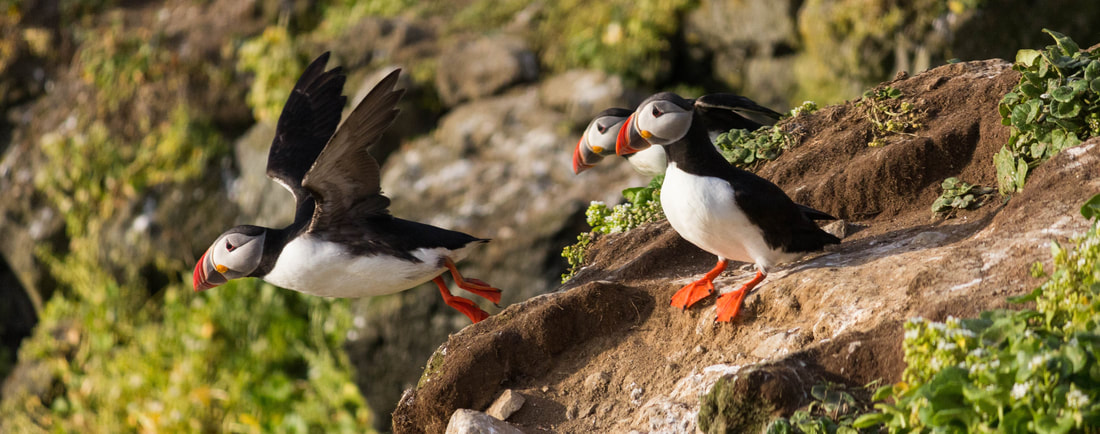
Picture

Unit II Checks for Understanding

Module 2.1
Module 2.5
Module 2.9
Module 2.13
Module 2.2
Module 2.6
Module 2.10
Module 2.14
Module 2.3
Module 2.7
Module 2.11
Module 2.15
Module 2.4
Module 2.8
Module 2.12
Module 2.16
Module 2.17

Unit II Notes

Case Study: American and Eurasian Beaver (Module 2.8)
Endemic and Cosmopolitan Species (Module 2.10)
Limitations of Range (Module 2.2) 
Invasive Species (Module 2.14)
Physical Characteristics of Iceland (Module 2.12)
The Planet's Biodiversity (Module 2.9)
Visualizing Range (Module 2.1)

Unit II Review

Unit II Concepts
Unit II Vocabulary Quizlet

Unit II Resources

Amoeba Sisters: Genetic Drift 
Nature.com: Effects of Biogeography on Community Diversity
NCBI: Taxonomic Site Guide
Open Yale Course: Island Biogeography and Invasive Species
Picture

Unit II Assignments

Amazonia Cladogram
File Size: 351 kb
File Type: pdf
Download File

Before They
File Size: 256 kb
File Type: pdf
Download File

Crisci - Phylogenetic Biogeography
File Size: 86 kb
File Type: pdf
Download File

Creating A Distribution Map
File Size: 333 kb
File Type: pdf
Download File

Factors of Speciation
File Size: 211 kb
File Type: pdf
Download File

Illustrating Species Importance
File Size: 219 kb
File Type: pdf
Download File

Natural Laboratory: Galapagos Finches
File Size: 213 kb
File Type: pdf
Download File

Song of Ice and Fire
File Size: 217 kb
File Type: pdf
Download File

Principles of Biogeography Jeopardy
File Size: 4266 kb
File Type: pdf
Download File

Species Energy Theory
File Size: 239 kb
File Type: pdf
Download File

The Lineage of the Wolf
File Size: 151 kb
File Type: pdf
Download File

The Lionfish Sleeps Tonight
File Size: 213 kb
File Type: pdf
Download File

Wolves of Isle Royale
File Size: 520 kb
File Type: pdf
Download File


Unit III - Applied Biogeography

Unit III Schedule

Week 16: Tools of the Biogeographer
     (Nov 28-Dec 2) 
Module 3.1: Ways We Study Life
     Central Question: How can biogeographers                 actually capture and study data?
     Forum: Work of the Biogeographer (3.1)
     - Tagging and Tracking
​          + Does Jane Goodall use GIS?
          + Tracking the Movement of Denali's Wolves
​
          + WWF Species Tracker: Svalbard Polar Bears
     - Capturing Visual Record
          + Fluke ID Catalog
          + TED Talk: Paul Nicklen 
          + Botswana Wildlife Watch
Week 17: Biogeographic Geoinquiry
     (Dec 10-14) 
Module 3.6: Organizing Data
     Central Question: What are effective ways of             communicating data?
     
Forum: Advantages of Visualizations (3.6)
     - Biogeographic Geoinquiry (Assignment)
          + ESRI: ArcGIS
     Benchmark: All parts of Ask, Acquire, and                 Organize should be completed ​for next class
Module 3.7: Analysis and Action Plan
     Central Question: Once you've got information           together what do you do with it?
     
Forum​: Next Steps (3.7)
​     - Biogeographic Geoinquiry (Assignment)
     Deliverable: Project Submission
          (All projects must be submitted by 11:59 p.m.              on Tuesday, December 18th, 2018) 
Week 17: Mapping Biogeography
     (Dec 5-9) 
Module 3.2: Remote Field Study
     Central Question: How can modern technology           be used for biogeographic studies?
     Forum: Modern Mapping (3.2)
     Map Lab: Bamboo Lemur Field Study 
          + Kianjavato Ahmanson Field Station
          + ESRI: ArcGIS
     Homework: John Grehan: Panbiogeography             Method (Read Thoroughly)
Module 3.3: Panbiogeography
     Central Question: How can geographic analysis         be used to discover spatial relationships between       taxa?
     
Forum: More of Biology or Geography? (3.3)
​     - Panbiogeography Methods (Notes)
     Map Lab: Panbiogeographic Rhinocerotidae
​          + Example Map
          + ESRI: ArcGIS
          - IUCN Red List
     - Panbiogeographic Relationships (Assignment)
Picture
Week 18: Biogeographic Geoinquiry
     (Dec 12-16) 
Module 3.4: Formulate Geographic Question
     Central Question: How can geography be used to       address issues in the natural world? 
     
Forum: Elements of a Geographic Question (3.4)
     - Biogeographic Geoinquiry (Assignment)
​          + Project overview and requirements
          + Part 1: Ask
     Deliverable: Final Geoinquiry Question
Module 3.5: Collect and Organize Data
     Central Question: What type of data do you need       to answer a geographic question?
     
Forum​: Identifying Reputable Sources (3.5)
     - Biogeographic Geoinquiry (Assignment)
​          + Data Collection
          Field Lab: Student Choice
     Benchmark: Ready to Organize Next Class
Week 18: Present Findings
     (Dec 17-21) 
Module 3.8: Project Work Day
     Central Question: What ties research together in       the better understanding of our planet? 
     Forum: Purpose of Research (3.8)
​​     - Biogeographic Geoinquiry (Assignment)
     - Student Survey
     Deliverable: Project Submission
Module 3.9: Project Presentations
     Central Question: When is research not enough         and how can it be used to solve a problem?
     
Forum​: Quality of Research (3.9)
​​     - Biogeographic Geoinquiry (Assignment)
     Deliverable: Project Submission

Unit III Checks for Understanding

CFU 3.1
CFU 3.2
CFU 3.3
CFU 3.4

Unit III Notes

Panbiogeography Methods (Module 3.3)

Unit III Resources

Quizziz 
For More Wonder, Re-Wild the World
Picture
Picture
Picture
Biogeography Projects
Picture
Picture
Picture

Unit III Assignments

Bamboo Lemur Geoinquiry
File Size: 1588 kb
File Type: pdf
Download File

gblemur_shapefile.zip
File Size: 590 kb
File Type: zip
Download File

prolemur_simus_e2_2017.csv
File Size: 67 kb
File Type: csv
Download File

Biogeographic Geoinquiry
File Size: 431 kb
File Type: pdf
Download File

Panbiogeographic Relationships
File Size: 180 kb
File Type: pdf
Download File

Panbiogeography Rhinocerotidae
File Size: 151 kb
File Type: pdf
Download File


Biogeography Course Resources

Biogeography Resources

Biogeography Index
File Size: 668 kb
File Type: pdf
Download File

Biogeography Syllabus (22-23)
File Size: 1545 kb
File Type: pdf
Download File

Conducting Field Studies
File Size: 376 kb
File Type: pdf
Download File

EBook: Fundamentals of Biogeography

Biogeography Forum

Picture

Biogeography Internet Resources

Picture
Picture
Picture
Picture
Picture
Picture
Picture
Picture
Picture
Picture
Picture
Picture
Biome Viewer
Earth Viewer
Picture
Picture
Powered by Create your own unique website with customizable templates.